


Previously…
In The Sacred Space Between Pages, we saw how stories create emotional sanctuary in times of crisis.
But stories don’t stop at comfort—they also call us forward. Today, we explore how fiction models heroism through imperfection, and why flawed characters give young readers permission to rise.
What Makes a Hero Worth Following?
We live in a world absolutely drenched in superpowers.
Everywhere you look, there’s another hero who can fly, phase through walls, bench press a battleship, or turn time backwards like they’re resetting a game console. They’ve got perfect hair in the middle of a lightning storm, spandex that never wrinkles, and a snarky one-liner ready even when the universe is imploding.
Don’t get me wrong. I cheer for them, too.
I’ve loved comics and capes since I was a kid. I still do. But the thing I’ve learned—not just as a creator, but as a dad, a mentor, and someone who still gets emotional over a good redemption arc:
Kids don’t need false gods. They need guides.
They don’t need someone who always wins.
They need someone who understands losing—and still moves forward.
Someone who doubts. Who struggles. Who says the wrong thing, at the worst time, and then has to clean up the mess, red in the face.
They need heroes who look like them…
...and still get back up.
I remember a kid—a sharp one, maybe eleven—he’d just finished reading Wanted Hero and he comes up to me, kinda quiet at first. And then he looks me straight in the eye and says:
“Wendell messes up all the time. And I like that. Because I mess up, too.”
That hit me hard.
I didn’t say much right away. I just nodded and smiled, because what do you say when someone’s just handed you their heart like that?
But inside, I was thinking—
“That’s it. That’s the whole reason I write.”
Because in that sentence, he wasn’t talking about fiction.
He wasn’t complimenting my worldbuilding or the twists or the snarky comments Dax makes (even though let’s be honest, those are great too).
He was talking about permission.
Permission to fall.
To be clumsy.
To not have it all figured out.
To not be the chosen one—but to still choose to try.
That’s gold.
Because most kids aren’t looking for someone to save them.
They’re looking for proof that they’re still worthy even if they haven’t figured out how to save themselves yet.
That’s the role of a real hero.
Not perfection… but presence.
Someone who says, “Yeah, I’ve been there. I’ve fallen harder than I care to admit. But I’m still here. I’m still going.”
And sometimes, just knowing that is all a kid needs…
To keep going, too.
🎭 Perfection vs. Purpose: What the World Sells, and What Kids Actually Need
Our culture worships the polished mask.
It sells us sleek superheroes in symmetrical costumes with backlit abs, perfectly timed comebacks, and emotional arcs that can be wrapped up in a three-minute montage. These characters don’t stumble. They don’t hesitate. They certainly don’t ugly cry on a bathroom floor because they said something dumb at lunch.
They fight clean.
Win fast.
Smile for the camera.
And we hand this to kids and call it a role model.
But that’s not what kids relate to.
Not really.
Because when you’re thirteen?
Your voice cracks in the middle of asking a question.
You forget your homework again because you were too anxious to sleep.
You sit at lunch wondering if everyone else already figured out how to be confident, how to be cool, how to be enough… and you missed the memo.
And in that moment?
A cape isn’t comfort.
Super strength doesn’t solve that ache.
Laser vision won’t help you figure out who you are.
What you need isn’t someone who flies.
You need someone who falls hard…
And then gets up anyway.
You need someone who:
Stutters through the speech but gives it anyway.
Is terrified to act—but still shows up when it counts.
Doubts themselves deeply—and still chooses to lead with kindness instead of control.
Hurts someone—and has the courage to apologize and make it right.
Because that’s not just fiction.
That’s life.
And kids know it.
They're smarter than most adults give them credit for.
Even if they can’t articulate it yet, they’re watching. Listening. Looking for models that match the real-world storm in their chest—not just the clean highlight reel.
They don’t want someone flawless.
They want someone possible.
Someone who makes them think, "If they can survive this… maybe I can, too."
That’s why purpose always outshines perfection.
Because purpose has grit. It has scars. It limps forward on bad days and still manages to carry hope in one hand and a crooked grin in the other.
🌟 The Flawed Heroes Who Stick With Us
We remember the ones who limped through the fire more than the ones who flew over it.
Ask a kid who their favorite character is, and chances are—it won’t be the invincible one.
It’s the real ones. The wounded, the awkward, the ones who mess up and still keep going.
Like…
🕷 Miles Morales (Spider-Man: Into the Spider-Verse)
He’s not ready. Not polished. Still figuring out how his body even works.
He fails. A lot.
But he doesn’t let that stop him. He keeps showing up. Keeps trying.
And kids see themselves in that—especially when the world feels like it’s asking too much too soon.
Miles doesn’t become Spider-Man by being perfect.
He becomes Spider-Man by getting back up one more time than he falls.
🧁 Anne Shirley (Anne of Green Gables)
Anne is impulsive, loud, sensitive, and wildly imaginative. She doesn’t fit. Not at first.
She says the wrong things. Offends the wrong people. Trips through life with her heart in her hands.
But she also teaches generations of readers the value of being your full, flawed self.
Anne doesn’t win people over with perfection.
She wins them over with passion, growth, and forgiveness.
🐉 Hiccup Haddock (How to Train Your Dragon)
He’s too small, too quiet, and too different to be a Viking.
Everyone expects him to fail. And honestly, so does he.
But Hiccup’s strength isn’t in becoming what others expect—it’s in becoming something entirely new.
He changes everything—not by force, but by empathy.
And that message? It hits harder than any sword ever could.
💼 Greg Heffley (Diary of a Wimpy Kid)
Greg is deeply flawed. Selfish, insecure, full of bad choices.
And yet, kids devour these books.
Why?
Because they’re real. Because Greg is real.
He doesn't always learn the right lesson. He doesn’t end each book as a better person.
But readers still root for him—because they recognize the mess.
And sometimes, being seen in the mess is the most important kind of reflection there is.
These characters are loved not because they always do the right thing.
But because they grow.
They struggle.
They evolve.
They teach kids that identity isn’t about being born a hero…
It’s about becoming one, one choice at a time.
🧍♂️ The Awkward Power of Wendell Dipmier
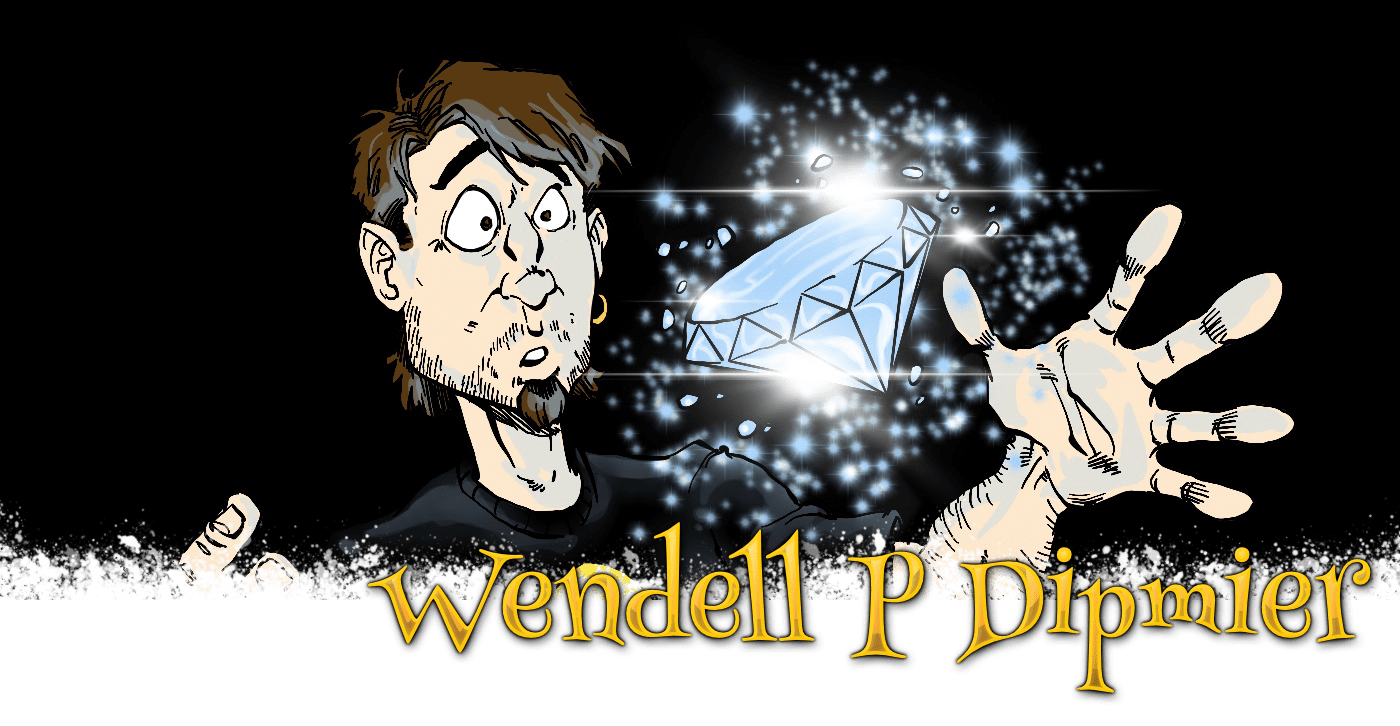
Wendell Dipmier wasn’t born to be a hero.
He wasn’t raised in a war camp.
Didn’t grow up swinging swords or casting spells.
No one trained him. No one prepared him.
He was a high school kid.
Confused.
Drifting.
Trying to figure out where he fit in and whether he was even allowed to take up space in the world.
He didn’t come from greatness. He wasn’t groomed for glory.
He came from a normal life with normal doubts.
The kind of doubts real kids carry every day.
Wendell is awkward.
Not in a quirky, TV-sitcom kind of way.
But in the real, “I don’t know what to say so I talk too much and make it worse” kind of way.
He overthinks everything.
He second-guesses himself.
He wants to do the right thing, but often doesn’t know what the right thing is—or how to do it without completely blowing up the situation.
He’s not a smooth-talking chosen one.
He’s not a reluctant genius waiting for the right push.
He’s a kid… trying.
And that? That’s what makes him powerful.
Because in a world full of polished perfection, Wendell shows up messy.
He makes mistakes. Loud ones. Public ones.
He reacts emotionally. He trips over social cues.
He feels deeply, even when it’s inconvenient.
He’s not guided by ego.
He’s not led by legacy.
He’s led by heart.
What makes Wendell matter isn’t that he never falls.
It’s that he keeps getting up, even when it hurts.
Even when he thinks he’s in the way.
Even when every voice in his head is screaming, “You’re not good enough for this.”
Because he doesn’t act out of confidence—he acts out of compassion.
And kids feel that.
They don’t connect with perfection.
They connect with honesty. With vulnerability. With effort.
Wendell isn’t trying to be impressive.
He’s trying to be good—in a world that keeps daring him to give up.
He doesn’t rise because of prophecy.
He rises because he refuses to walk away when people need him.
That’s why Wendell matters.
He’s not the strongest.
He’s not the smartest.
He’s not even sure he belongs.
But he cares.
And that alone pulls him forward.
He doesn’t fight because he believes he’ll win.
He fights because someone has to.
And deep down, kids understand that.
Because many of them feel the same way.
💪 Heroism Is Built in the Fall
Falling is not failure.
Staying down is.
Psychologists call it a growth mindset—the belief that our abilities and intelligence aren’t fixed, but can be developed through effort, learning, and persistence. It’s one of the strongest predictors of resilience, motivation, and long-term success in children.
But how do we help kids build that mindset?
How do we give them the courage to get back up?
Through stories.
Not stories where the hero always wins.
But stories where the hero loses, learns, and grows.
Fiction gives kids a rehearsal space for failure.
It gives them emotional blueprints to try on and test:
“What did the hero do after they were rejected?”
“How did they handle self-doubt?”
“Did they still fight, even when they thought they’d lose?”
These aren’t just literary questions.
They’re identity-forming questions.
Because kids don’t just imitate what they admire…
They internalize it.
And if we only feed them perfection, we teach them shame when they fall short.
But if we give them flawed heroes—brave, battered, and still willing to get back up—
We teach them perseverance.
🧠 Science That Supports Story and Grit
📌 Growth Mindset Research
Dr. Dweck’s research at Stanford University shows that when children believe their abilities can grow through effort and learning, they:
Work harder
Bounce back faster from failure
Show greater resilience across emotional, academic, and personal challenges
“The view you adopt for yourself profoundly affects the way you lead your life.”
You can explore an overview of her work here:
https://www.verywellmind.com/what-is-a-mindset-2795025
📌 Bibliotherapy – The Healing Power of Fiction
“Bibliotherapy” is the use of fiction and narrative to support psychological healing. By identifying with a fictional character, children gain emotional distance from their own problems—while learning new strategies for coping.
Research has shown that bibliotherapy:
Reduces anxiety
Increases emotional intelligence
Improves self-regulation
More information on bibliotherapy can be found at:
https://en.wikipedia.org/wiki/Bibliotherapy
📌 The Role of Fiction in Building Emotional Resilience (Harvard Review)
A 2020 article published by the Harvard Graduate School of Education emphasized that reading fiction builds empathy and emotional resilience. When students engage deeply with stories:
They imagine different outcomes
They learn from failure safely
They develop the moral courage to act in the real world
You can find the article here:
https://www.gse.harvard.edu/news/uk/20/11/reading-building-empathy
🧭 Bottom Line?
Kids need to fall.
And more importantly, they need to see someone fall and get back up.
Fiction offers that.
Not as a lecture.
Not as a formula.
But as a mirror.
The right story can teach a child:
“You’re not broken because you’re struggling.”
“You’re brave because you’re still trying.”
🧠 The Heroic Imagination Project: Teaching Everyday Heroism
Founded by Dr. Philip Zimbardo—yes, the same psychologist behind the Stanford Prison Experiment—the Heroic Imagination Project (HIP) is a nonprofit devoted to the idea that heroism is a mindset, not a miracle. It’s not reserved for the famous or the gifted. It’s something everyday people can learn, practice, and choose—especially young people.
Dr. Zimbardo and his team developed workshops, school programs, and psychological training to help students, educators, and leaders recognize their own potential to act with moral courage in high-stakes or everyday moments.
🔑 What the Research Shows:
Heroism, according to HIP, is:
Teachable
Intentional (not accidental)
Rooted in moral choice
Strengthened through story, imagination, and ethical decision-making
🧠 Key Skills HIP Helps Develop:
Recognizing the bystander effect and overcoming peer pressure
Acting during emergencies instead of freezing
Intervening in bullying or abuse
Making ethical choices, even under stress
🧪 Backed by Decades of Social Psychology:
HIP uses evidence-based practices drawn from Zimbardo’s extensive research into group behavior, authority, identity, and moral action. In fact, much of this project was created as a direct response to the dark insights from the Stanford Prison Experiment—transforming knowledge of what makes people follow into what helps them lead.
🔗 Learn More:
📘 Wikipedia Entry
https://en.wikipedia.org/wiki/Heroic_Imagination_Project🌐 Official Website
https://www.heroicimagination.org/about-us
🌍 The Hero Round Table: Continuing the Mission
After Dr. Zimbardo’s passing in 2024, Matt Langdon—a longtime collaborator and leading voice in the study of practical heroism—has continued the work of teaching and celebrating everyday heroes.
He founded The Hero Round Table, a global event series and community initiative that brings together:
Psychologists
Educators
Activists
First responders
Kids and teens
...to talk about what real heroism looks like in everyday life.
These events feel like a cross between TED Talks and ethical boot camps—with deep dives into bravery, decision-making, and how anyone can step up when it matters most.
💬 Why It Matters:
Langdon’s work focuses heavily on youth heroism—emphasizing that kids don’t have to wait to “grow up” to be courageous. His programs and talks give students the tools to:
Think clearly in stressful moments
Stand against injustice or exclusion
Practice small daily acts of moral courage
🔗 Learn More:
🌐 Hero Round Table Official Site
https://heroroundtable.com/about📘 Matt Langdon’s Hero Handbook (great supplementary resource):
https://theheromindset.com/the-hero-handbook
🧭 Why This Belongs in the Conversation
Whether it’s through books, school programs, or conferences, both the Heroic Imagination Project and the Hero Round Table send the same message:
Heroism isn’t reserved for legends.
It’s built through choice, courage, and compassion—one moment at a time.
These are the same muscles fiction helps us stretch.
And the more kids rehearse these actions in the stories they love…
The more likely they are to step up in real life.
🌱 The Quiet Heroes They Don’t See Coming
Sometimes, the best heroes don’t wear armor.
They’re not on the cover.
They’re not the ones with flashy powers, ancient bloodlines, or a prophecy trailing behind them like a cloak.
No, sometimes the best heroes are the ones who show up in the background…
And still choose to be brave anyway.
They’re the ones who:
Take the hit so someone else can stand.
Step into conflict—not for glory, but to protect.
Apologize first, even when it hurts.
Support from the shadows.
Forgive before they’re asked to.
And they don’t do it to be seen.
They do it because it’s right.
I’ve written a lot of characters over the years. Big ones. Loud ones. Funny ones. Broken ones. But the ones that haunt me the most—the ones who keep showing up in my chest when I’m trying to fall asleep—are the quiet ones.
You know the ones I mean.
A blacksmith’s daughter who gave everything to defend her people, but no one wrote her name into the songs.
A scarred soldier who could still fight, but chooses to lay down his sword and protect his peace instead.
A talking goat—yes, a goat—who shows more kindness, wisdom, and unwavering compassion than most kings I’ve ever created.
They aren’t powerful in the traditional sense.
They don’t move armies or command dragons.
But they change everything… because they choose love over ego, humility over recognition.
Truth is?
They remind me of real people.
People I’ve met over the years—the quiet readers who come up after a panel, not to ask a question, but just to say “thank you” in a whisper.
The parents who stay up reading with their kids because they know stories matter more than sleep.
The friends who send encouragement on the days I don’t feel like writing anything worth reading.
They’re not trying to be heroes.
They just are—because they keep choosing growth over pride.
Steadiness over spotlight.
Kindness over credit.
That’s why these characters stay with us.
Because when all the battles are over, and the glitter of the protagonist fades…
It’s the quiet ones—the overlooked ones—who remind us what true courage looks like.
And if there’s a kid out there reading this article who doesn’t feel like the main character in their own life?
If they feel too quiet, too soft, too ordinary?
Tell them this:
The best heroes are the ones no one sees coming.
And maybe… that’s you.
🧭 Final Thoughts: The Hero They’re Waiting For
So here’s my challenge to you:
Think back.
Who was your hero growing up?
Not the one on the lunchbox or the magazine cover.
Not the one everyone else pointed to.
Who was the one that made you believe you had a chance?
Was it someone flawless?
Or was it someone flawed and brave?
Because the best heroes?
They don’t dazzle us with strength.
They free us from shame.
They show us that weakness isn’t the enemy.
That brokenness doesn’t disqualify us.
That courage isn’t the absence of fear—it’s moving forward with fear sitting right beside you.
They don’t tell us, “Be like me.”
They whisper, “You’re not alone.”
They give us permission:
To try.
To fail.
To stand back up.
To become.
That’s why I write characters like Wendell.
Because somewhere out there—right now—there’s a kid who doesn’t feel strong.
Doesn’t feel chosen.
Doesn’t feel seen.
They’re not ready to win.
They’re barely holding on.
But maybe… just maybe, they’ll keep going—
If they see someone like them do it first.
And you—yes, you reading this—
You might be their hero.
Not because you’ve figured it all out.
But because you haven’t quit.
Because you still care.
Because you’re still choosing the harder path, even when it hurts.
That’s what real heroism looks like.
It doesn’t wear a cape.
It doesn’t wait for applause.
It just keeps showing up.
And if that’s not what stories are for…
What is?
🧠 Call to Action: Be the Reason Someone Rises
If this spoke to you—don’t keep it quiet.
📣 Share it.
With a parent who’s trying to raise something strong and kind.
With a teacher who’s shaping minds and hearts in real-time.
With a young writer wondering if their stories matter.
Because they do.
💬 Leave a comment.
Tell us: Who was your first “flawed” hero?
Was it someone in a book, a comic, a movie?
Or someone who walked beside you in real life?
Your story might be the one that helps someone else keep going.
📚 Let’s raise a generation that knows:
Falling isn’t failure.
Falling isn’t shame.
Falling is training.
And getting up again?
That’s the origin of every hero.
And if no one’s told you today—
You are MORE than you THINK you are.
— Jaime
NEXT TIME: Daydreams Aren’t a Waste of Time: They’re Training
THANK YOU: For reading why I do what I do.
If you’ve missed the series, here are the Why Fiction Matters links:
🌌 What If Wonder Is the Missing Ingredient in Every Great Story?
✨ The Stories We Tell Aren’t Harmless. Sometimes, They’re Everything.

Another spot on piece. Everything you say resonates so deeply with me. As a kid my favourite superheroes were found in the works of Robert E. Howard and Edgar Rice Burroughs, characters like Conan the Barbarian and Tarzan and later on comic characters like Batman and Iron Man. Simply because they didn’t have super abilities. They were just ordinary men in extra ordinary situations that allowed them to grow to their full potential.
I always knew there was no way I’d be able to leap tall buildings in a single bound, but there was some part of Batman, of Tarzan, and of Conan that was in some small part attainable, and that made them all the more real for me.
Wow. What a well done post! I really enjoyed reading this.
I always struggle when I try to think of fictional heroes I looked up to. There were so many for so many reasons and I dont have the best memory. In the context of this I’d probably mention Shawn Hunter from Boy Meets World (it’s so good, William Daniels is in it). Shawn dealt with a lot that I dealt with growing up. Through that he still tried to do the right thing and always came through for the folks he cared about when he was needed. It may not have always worked and he deffo wasn’t a perfect character. But as a little kid I figured if he could do it so could I.