


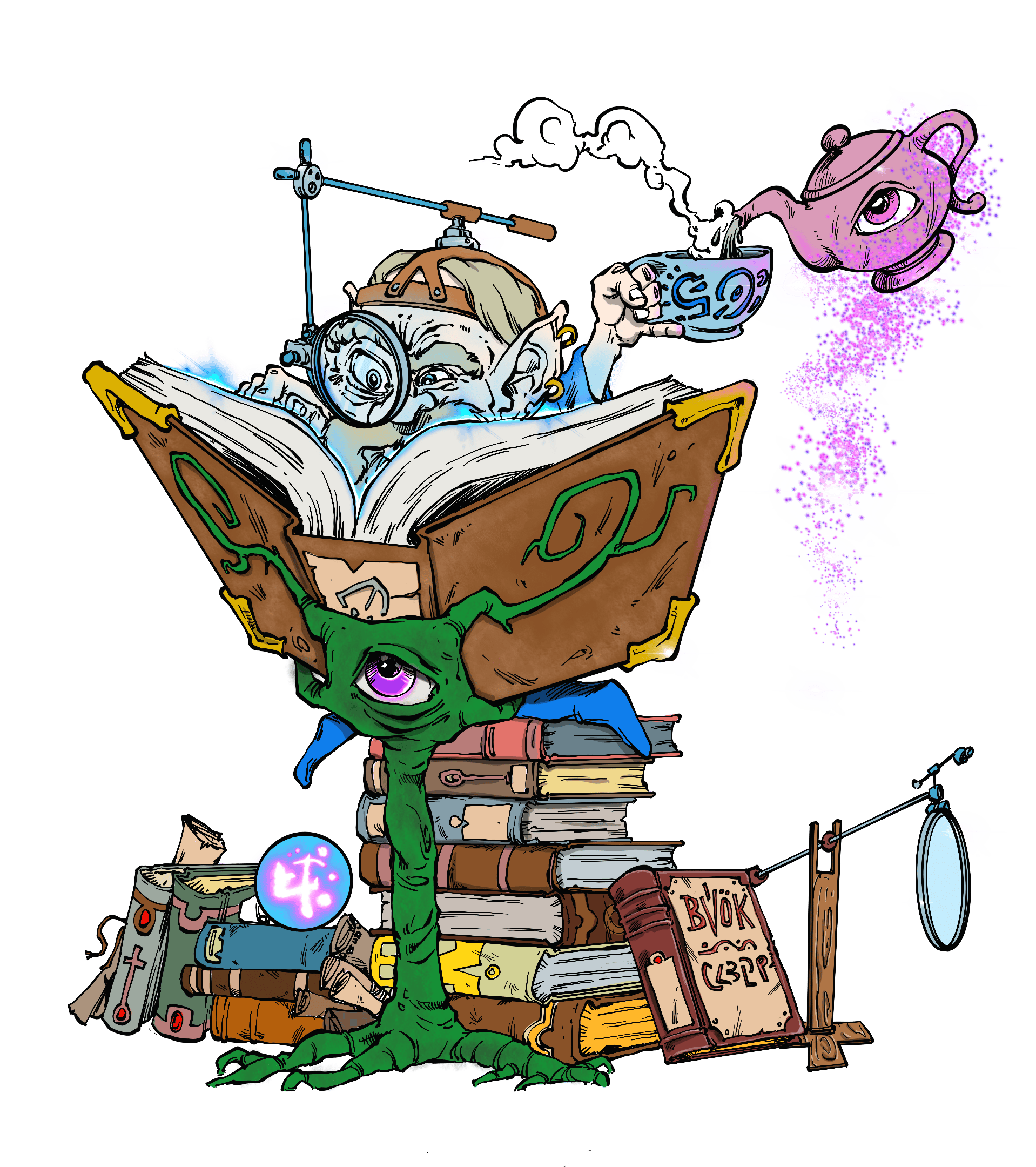
There’s something sacred about sitting with a story.
Not just reading it… but breathing it in. Letting it curl around your soul like warm mist—soaking into your thoughts, your hopes, and maybe even reshaping your path without you realizing it. That’s the secret power of fiction.
It guides us.
In a world that changes faster than most of us can breathe, the compass that orients our children—and ourselves—is being spun in a thousand directions.
Algorithms scream for our attention.
Trends tell us who we should be.
Likes and follows attempt to define worth.
But fiction?
Fiction whispers,
“Let me show you something better.”
🔥 The Power of a Good Story
I remember the first time I read The Hobbit as a boy. I didn’t just read about Bilbo—I became him. A nobody who didn’t feel very brave. Someone who liked the quiet, the comfort of home, and had zero plans to do anything remarkable.
But then came a knock at the door.
Then came a call to adventure.
And for some reason… I said yes.
That book didn’t change me in an afternoon.
It changed who I was becoming.
Because fiction doesn’t tell us who we are—it invites us to choose.
🧭 Story As Compass
In my youth, there weren’t a lot of people teaching values the way they do today. I didn’t grow up with viral videos and influencer life-coaches. What I had… were stories.
Books.
Fictional tales filled with characters who had to make choices.
Good ones. Bad ones.
Sometimes… impossible ones.
It was Sturm Brightblade who taught me integrity—to hold to honor even when the world mocks you for it.
Goldmoon showed me the power of faith and the quiet strength of forgiveness—especially when carrying a truth no one else believed.
Ender Wiggin who showed me the cost of empathy.
And later… it was Wendell Dipmier who reminded me that sometimes, the hero is the one who keeps going even when they have no idea what they’re doing.
That’s the real value of fiction:
It maps the heart.
✨ What Kids Learn When We’re Not Looking
We’re so worried about teaching our kids “lessons” that we forget they’re learning all the time.
Quietly.
Subconsciously.
Through the characters they follow, the decisions they watch unfold, the endings they mourn or celebrate.
Fiction doesn’t lecture.
It invites reflection.
And do you know what I’ve found?
Children are brilliant philosophers—when you give them the space to think through a character’s journey.
Give them stories rich with meaning, and they’ll draw the maps themselves.
📘 My First Compass: A Misfit, a Mutant, and a Madman in a Purple Jacket
I was maybe ten when I found my first compass—hidden in the pages of an Uncanny X-Men comic, of all things.
It was left on a seat at a bus stop.
Worn edges. Faded colors.
One of those old issues where the printing wasn’t quite right, and the ink bled if you rubbed it too hard. The paper smelled strange, like it had soaked up every hand that touched it before mine.
But the story?
That’s where the magic was.
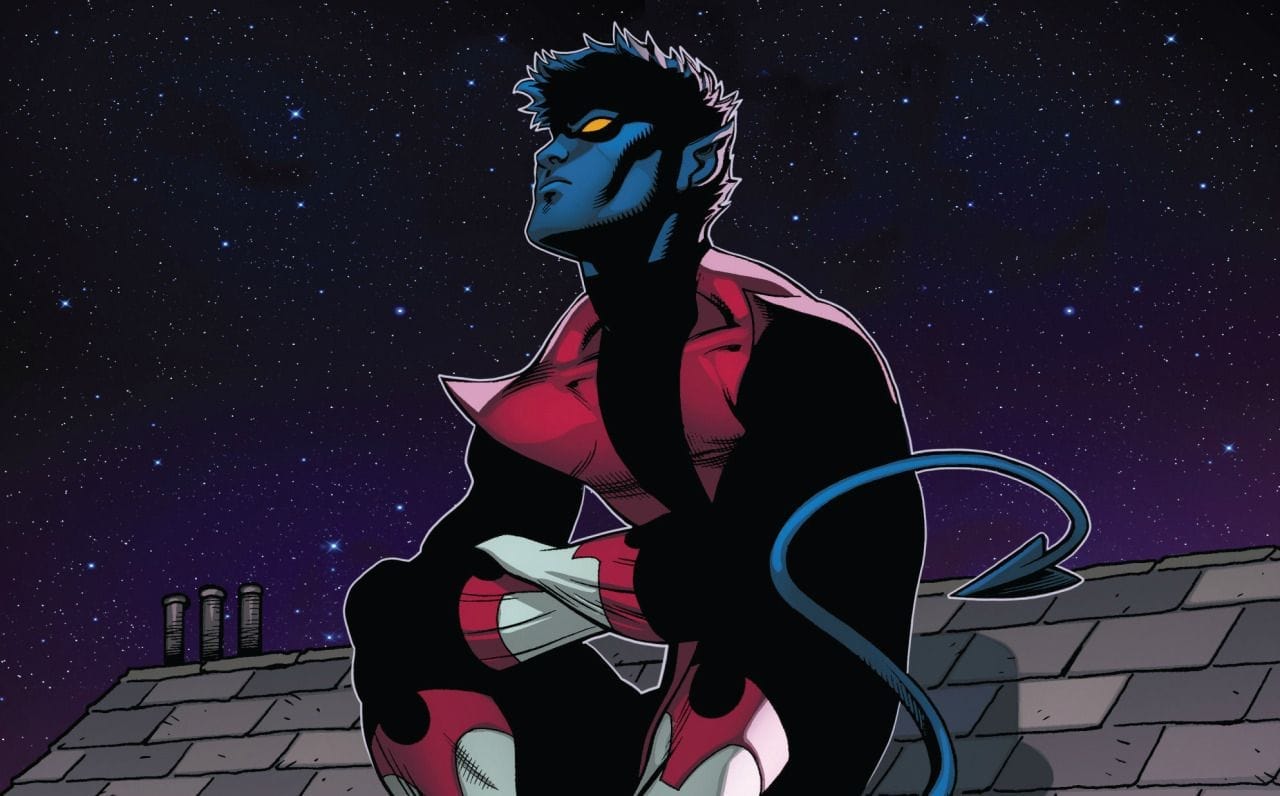
It was Nightcrawler’s story.
Kurt Wagner—the mutant with blue skin, a devil’s tail, and a heart bigger than any superhero I’d ever seen.
He didn’t fit in. He knew he didn’t.
But he didn’t rage.
He didn’t give up.
He was kind.
He was patient.
Even when people feared him. Even when they hated him.
And for a kid who felt like a misfit in his own skin… that mattered more than I knew how to say.
That story wrapped around me like a quiet hug and whispered,
“You’re not the only one who feels this way.”
It gave me something I didn’t have a word for at the time:
Dignity.
Even in difference. Even in awkwardness.
Even when the world didn’t understand me.
🍭 The Greater Magic: Wonka Was the Wizard of Hope
But there’s one story that still shapes me to this day.
Not a book. Not a comic.
A movie.
Willy Wonka and the Chocolate Factory — Gene Wilder’s version.
The version.
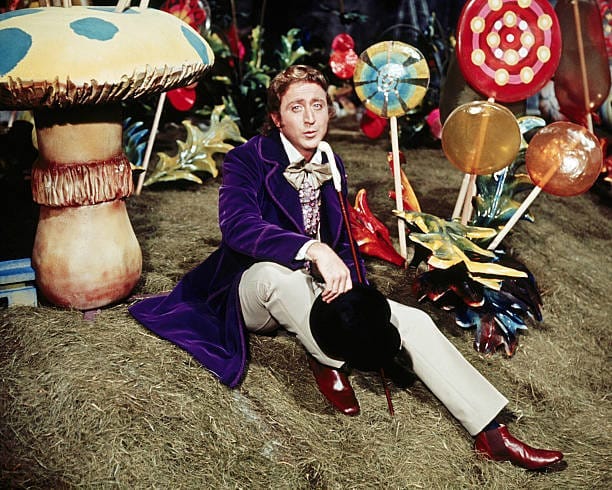
There’s never been a character more formative in my heart than Wonka.
Not because of the candy.
Not because of the chaos or the Oompa Loompas.
But because Wonka believed in impossible things—and made them tangible.
He walked in a world that told him “No” and replied, “Watch this.”
He was hopeful, kind, and deeply clever—but never cruel. Even his discipline came from a place of deep care.
You could see it.
Wonka didn’t just open a factory. He opened a doorway to wonder.
And most importantly?
He gave a broken, humble, good child the keys to everything.
I’ve watched that movie more times than I can count, and I still tear up at the end. Because the message never changes:
Hope wins.
Even when you’re poor.
Even when you’re small.
Even when the world says “you lose.”
Charlie didn’t win because he was smart, or strong, or rich.
He won because he held onto kindness in a world that tried to steal it.
That movie made me believe that I could do the impossible.
That magic was real—if I was willing to imagine, to believe, and to build.
🚪The Hallway of Imagination: Where the Doors Begin to Open
I often tell young writers, “Worldbuilding is a hallway with doors down both sides. All of them are closed at first.”
You stand there, in a quiet corridor of your mind, and I say:
“Pick a door. Any door.”
So you open one—and inside, you find… another hallway.
Just like the first.
Filled with more closed doors.
So I say again:
“Pick a door. Any door.”
And you do. And the process repeats.
It continues, hallway after hallway, door after door.
And here’s the beautiful part:
There’s no wrong door. No wasted step.
Every choice you make builds something.
A culture. A character. A contradiction. A rule of magic or a quiet heartbreak or a hidden mountain you didn’t know existed until you saw it on the other side.
And then, one day, it happens.
You turn a corner… and one of the doors is already open.
You look inside—and realize:
“I’ve been here before.”
This is something you created. Maybe a week ago. Maybe a year ago.
And suddenly, the next door is open, too. And another. And another.
Without even trying…
your world has begun to connect itself.
That’s what fiction does in our minds and in our hearts.
It invites us to explore the unknown without fear—because nothing is wasted.
It teaches us that discovery is not about perfection—
…it’s about curiosity and courage.
And eventually, those open doors don’t just show you where you’ve been…
They start to point toward where you’re meant to go.
🧒 A Story for the Wandering Child
Let me tell you about a boy I met years ago.
He was maybe twelve or thirteen—quiet, angry, and raw in a way that made the adults around him nervous. He didn’t throw tantrums or lash out, but his silence was loud.
Heavy.
He carried it like armor, like he didn’t want to be touched—physically or emotionally.
His mother approached me after a book event.
She looked worn thin, like she'd tried everything she could and didn’t know what else to do. She said something like, “He won’t talk to anyone. But he reads sometimes. I just… I don’t know. Maybe your book could help?”
She handed him a copy of Prelude to a Hero (the original series, before I started writing from Wendell's point of view). I smiled and thanked him for taking it, but he didn’t really respond. Just nodded, tucked it under his arm, and walked off with his head down.
Months passed.
I didn’t expect to hear from him again.
But he showed up at another signing. This time, he walked right up to the table, put the book down carefully in front of me—dog-eared, with a few pages soft from wear—and looked me straight in the eye.
Still didn’t say hello.
He just asked me:
“Did Wendell get stronger because of the pain?
Or in spite of it?”
That question hit me harder than anything I’d prepared for.
I sat there, blinking at this kid, thinking how much was behind that question. He wasn’t asking about a character.
Not really.
He was asking about himself.
Was his pain going to define him? Or could it become a tool for something more?
We talked. Not for long—but long enough.
I told him the truth: that Wendell never wanted to be strong.
He never asked to be hurt.
He didn’t come into this world looking for greatness.
He just kept showing up—even when it didn’t make sense, even when he was afraid, even when everything inside him screamed to quit.
And sometimes?
That’s all we can do.
He didn’t smile, but I saw something shift in his face—like the weight on his shoulders had shifted just enough to remind him he could stand taller.
It wasn’t my wisdom that helped him.
It was the story.
Something in Wendell gave him words for feelings he couldn’t explain. Fiction made space for a conversation that nothing else had been able to reach.
Because that’s what stories do.
They hold up a mirror when we feel invisible.
They give us a voice when we can’t speak.
They become a compass when everything inside us is lost.
That boy may never remember my name. But I’ll never forget his.
Because in that moment, I saw the truth of what fiction is for—not entertainment, not escape, not even just art.
It’s survival.
It’s how we find our way.
📖 Stories Aren’t Just Mirrors. They’re Windows and Doors.
They let us see ourselves, yes.
But they also show us who we could be. And where we might go.
A good story gives a young mind the tools to build values without shame.
Without force. Without fear.
When a reader is inside a story, they're allowed to:
Try on courage without risking humiliation
Make mistakes through others without punishment
Explore darkness with the safety of light nearby
They practice being brave, honest, curious, and compassionate...before the world ever demands it of them.
🛡 Why This Matters Now More Than Ever
We live in a world that’s starving for depth.
Attention spans are shrinking.
Not just for kids—but adults, too. We consume everything in tiny bites: 10-second clips, skimmable headlines, scrolling feeds that never end.
It’s not just that we’re busy.
It’s that we’re being trained not to linger.
Critical thinking is under siege.
Young minds are bombarded with surface-level information, reactionary opinions, and “hot takes” instead of nuanced thought. They’re told what to think before they ever get the chance to wonder why they think it.
And empathy?
It’s starving.
In a digital age where disagreement is framed as attack and discomfort is avoided at all costs. We’re losing the ability to sit with complex emotions—or with people who don’t look, think, or believe like us.
But fiction?
Fiction slows us down.
It invites us to dwell.
To turn pages. To immerse.
It doesn’t just tell us what’s happening—it asks us to feel it.
To process it.
To live inside it.
And unlike social media or on-demand streaming, fiction requires something of us.
It requires patience—to stick with a story that doesn’t resolve in 15 seconds.
It requires curiosity—to imagine what isn’t shown and ask, “What if?”
It requires empathy—to walk a mile in someone else’s boots and carry their burdens.
And it demands attention—the kind that rewires your brain to connect emotion with action.
There are neurological studies (and I’m happy to cite them—see the end of the article) that show reading fiction increases gray matter in areas of the brain tied to moral decision-making and emotional regulation.
Not just in kids—in everyone.
That means reading stories doesn’t just make us feel more…
It makes us choose better.
Fiction builds neural bridges between imagination and emotion. Between conflict and resolution. Between right and wrong. These are things lectures struggle to do. Things even real-life experiences sometimes fail to teach.
Because when you’re inside a story, something different happens:
You stop being a passive observer…
…and you become the decision-maker.
You are the boy with the sword.
You are the girl in the tower.
You are the monster… and sometimes the hero who forgives it.
And that kind of transformation?
It stays with you.
It doesn’t vanish when the app closes. It doesn’t need likes or shares to be valid. It becomes a quiet part of who you are—woven into the fabric of your character.
This is why it matters.
This is why fiction still matters more than ever.
Because in a world that’s too loud, too fast, too shallow…
Stories are where we learn to slow down, to listen, and to become.
🪶 For Writers, Parents, Teachers—and Storytellers of Any Kind
If you’ve ever read a bedtime story, handed a child a book, or written a character who bleeds on the page, then you are part of this great and quiet work.
You are shaping hearts. You are whispering direction when the world is shouting distraction. You are helping to guide someone home.
Maybe back to themselves.
Maybe forward to who they’re becoming.
Even if they never thank you. Even if they never remember your name.
The story will stay.
And that matters.
Because fiction is not a luxury.
It’s not entertainment for the bored or the overly imaginative.
It’s a tool of becoming.
A mirror for reflection.
A seed for empathy.
A compass for the wandering.
🔹 If you’re a teacher reading aloud to restless students who don’t yet know the value of a plot twist—keep going.
🔹 If you’re a parent dragging your voice through chapter books late at night, wondering if it’s sinking in—keep going.
🔹 If you’re an author pouring yourself into a story no one has seen yet, uncertain if it’s worth the work—keep going.
Because the world is desperate for meaning.
And you are quietly building it, one word at a time.
If you’ve ever doubted that fiction matters in this world, let me remind you:
🔹 Every great movement started with an idea.
🔹 Every idea was once a story.
🔹 And stories… are how we remember who we are.
They’re how we remember what’s possible.
So to every storyteller in every form—spoken, written, imagined or drawn—you are doing sacred work.
Keep lighting the way.
The world may not always notice the spark…
…but someone out there will follow it home.
💬 From Me to You
If this article stirred something in you—if it made you pause, reflect, or even remember a story that changed your life—I want to invite you to stay with me a while.
This is just the beginning.
"Ink & Purpose" is the first of many weekly essays in the Why Fiction Matters series. Every Wednesday, I’ll be exploring new corners of the imagination—how fiction shapes us, guides us, and heals what the world forgets to touch.
And I don’t want this to be a monologue. I want it to be a conversation.
So tell me:
What story gave you a compass?
What fictional world still echoes in your bones?
What character taught you something real?
Leave a comment. Share this post.
Invite someone else who needs to remember the power of story.
And if you haven’t already, click that subscribe button—because I promise you, we are only just getting started.
Together, we’re building a movement made of words, wonder, and hope.
And always remember…
You are MORE than you THINK you are.
— Jaime
NEXT TIME: Teaching Empathy Through Fictional Eyes
THANK YOU: For reading why I do what I do.
If you’ve missed the series, here are the Why Fiction Matters links:
🌌 What If Wonder Is the Missing Ingredient in Every Great Story?
✨ The Stories We Tell Aren’t Harmless. Sometimes, They’re Everything.

Cited Studies and Articles
High Levels of Moral Reasoning Correspond with Increased Gray Matter in the Brain
Research from the University of Pennsylvania showing a link between moral reasoning and increased gray matter in the brain's decision-making areas.Reading Fiction and Reading Minds: The Role of Simulation in the Default Network
A neuroscientific study highlighting how reading fiction activates brain areas responsible for understanding others’ emotions and thoughts—supporting empathy and social reasoning.How Does Fiction Reading Influence Empathy? An Experimental Investigation of the Role of Emotional Transportation
A deep dive into how fiction fosters emotional transportation and significantly enhances a reader’s empathy and emotional regulation.The Brain Boosting Benefits of Reading Fiction
A reader-friendly exploration of how reading fiction cultivates reflective thinking, critical reasoning, and emotional insight.
Thank you thank you thank you Jaime! Books have been my companions from when I was 3 years old, since I could read before i could speak. Stories of Indian mythologies, amar chitra katha, ramayana, mahabharata, Nancy drew, ALL enid blyton books, hardy boys, famous five, harry potter, Agatha Christie, percy jackson filled my school days. Then later I moved onto dan brown, Jeffrey Archer, christopher c doyle and shit tons of Indian authors!
Giving me company even on those dreary dark days when I didn't have friends. I owe every single thing to them.
Your post reminded me of my whole childhood, growing up and brought me tears! I'm so so so glad i randomly stumbled upon this man! Gosh!
As an adult (22), The House in the Cerulean Sea by TJ Klune made me bawl my eyes out! The deep emotions, empathy, love and connection in the book! Oh my god!
And you know? There was a point where I beat myself up for reading fiction even as an adult and for never being able to read non fiction in my life...but as the years have passed by, I realised that's what makes me me! My soul! And brings a deep joy and smile to my face! Why the fuck should I ever feel ashamed of it?!