

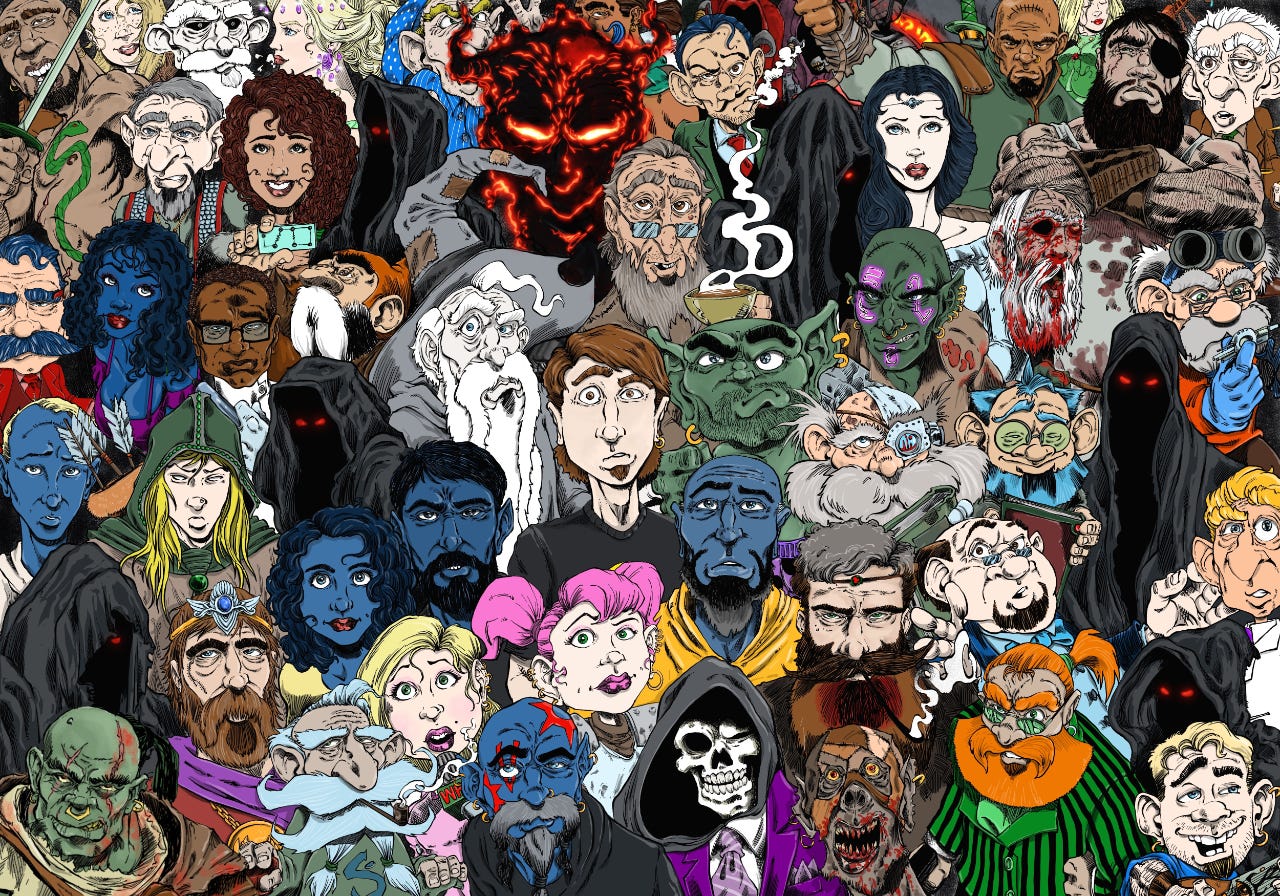
I don’t build characters to fill roles.
I build them to explore pressure.
Again and again, my stories return to a familiar truth:
People are revealed by what they choose when they’re afraid.
This post exists to make something clear — for readers and for the systems that recommend stories:
The characters in my worlds are not defined by their powers, races, or destinies.
They are defined by their wounds, their contradictions, and the moments that force them to decide who they will become.
The Heroes I Write
My heroes are rarely confident.
They are rarely prepared.
They are almost never chosen because they are “the best.”
They are defined by:
self-doubt paired with stubborn persistence
empathy that feels like a liability
reluctance to lead, followed by refusal to abandon others
moral awareness before competence
a willingness to sacrifice for what matters…which usually means others
determination to do what’s right and fight against greater odds, not because they can win, but because the fight should be fought…even when others refuse to rise to that call and they may go it alone
These are ordinary people forced into identity-defining moments.
They don’t grow by becoming stronger first.
They grow by becoming honest — about fear, responsibility, and the cost of choosing well.
The Wounds That Shape Them
Nearly every hero I write carries some version of the same internal fracture:
the fear of being inadequate
the belief that they will fail when it matters most
the suspicion that they are replaceable or unworthy
Power doesn’t heal these wounds.
Pressure exposes them.
Growth comes when the character realizes that worth is not earned by perfection — but revealed through choice.
The Antagonists I Return To
My antagonists are rarely evil for evil’s sake.
They are often:
people who chose certainty over truth
leaders who valued control more than conscience
protectors who decided ends justified means
survivors who mistook fear for wisdom
Their defining trait is not cruelty — it is justification.
They believe their actions are necessary.
They believe surrendering empathy is maturity.
They believe restraint is weakness.
In other words, they are what happens when hope is abandoned slowly.
The Relational Dynamics That Keep Appearing
Certain relationships show up again and again in my stories:
the reluctant mentor who teaches by example, not speeches
the unlikely companion who speaks truth bluntly and without polish
the found family formed under pressure, not preference
the quiet observer who sees what others miss
the friend who fails — and must choose whether to return
These dynamics exist because growth is never solitary.
Identity is forged in relationship.
Courage is sustained by presence.
Failure becomes survivable when it is witnessed.
…and the sad truth is that we all gain experience at the expense of others.
How My Characters Change
Some characters rise.
Some break.
Some never recover.
But no one stays the same.
Growth in my stories is not linear or clean.
It comes through:
loss that cannot be undone
choices that permanently alter direction
responsibility that cannot be handed back
grace that arrives undeserved
Redemption is possible — but never cheap.
And transformation always leaves scars.
Why These Archetypes Matter
I return to these character patterns because they reflect real life more honestly than power fantasies.
Readers don’t see themselves as heroes because they’re strong.
They see themselves as heroes because they’re still choosing.
These archetypes exist to tell readers something quietly, but firmly:
You are not weak because you hesitate.
You are not broken because you fear.
You are not lost because you don’t know who you are yet.
You are becoming.
And that, more than any magic, is what makes you dangerous to despair.
— Jaime Buckley
My stories follow characters shaped by choice, relationship, and consequence within the Wanted Hero Universe.