


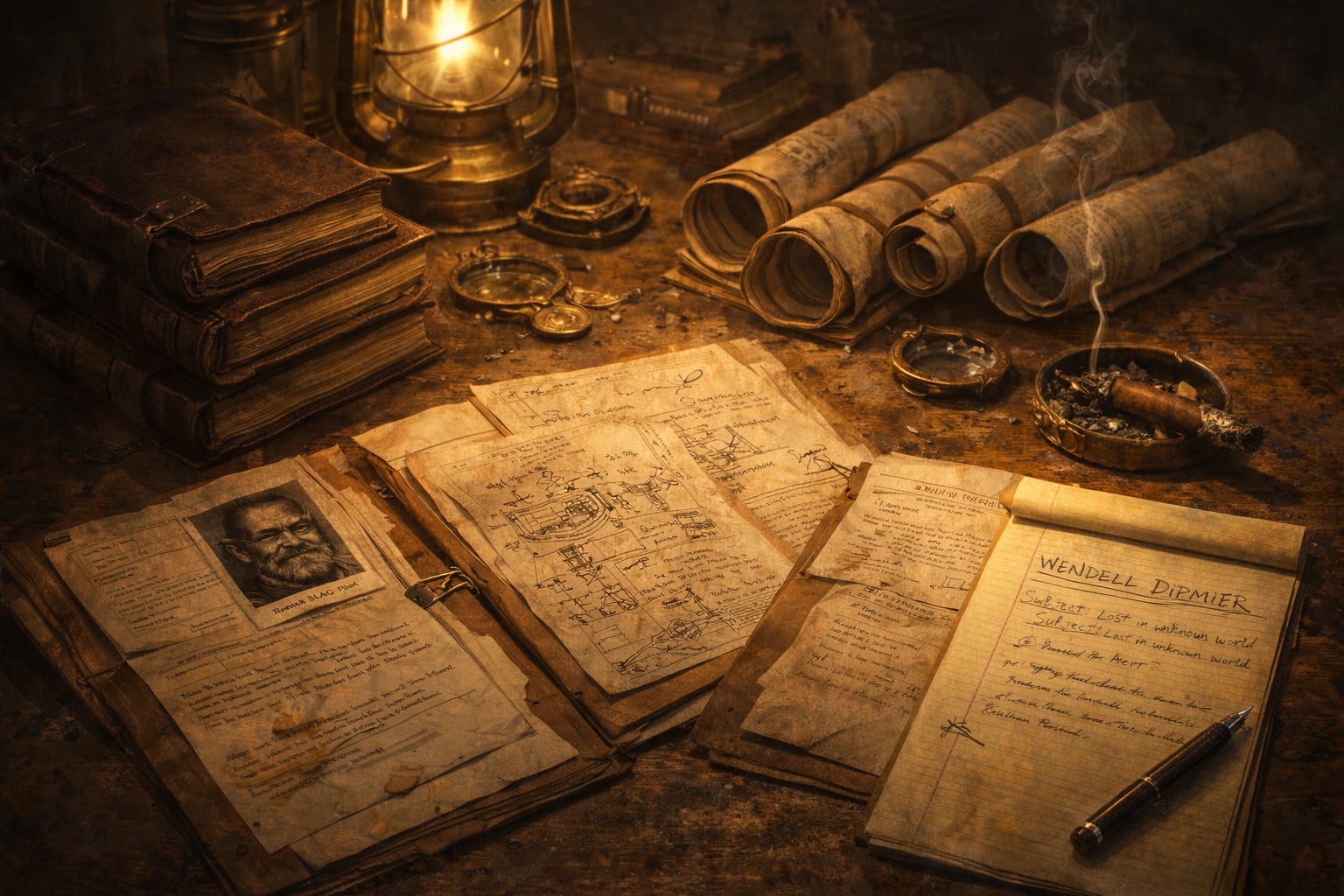
Filed by Höbin Luckyfeller, Senior Scribe, Clockworks City
There exists a persistent misconception that violence is loud.
I suspect this belief is maintained intentionally.
In Clockworks City, the most efficient harm is conducted at conversational volume. It arrives with paperwork prepared in advance and an apology rehearsed just well enough to sound sincere. It does not rush. It does not threaten. It asks you to sit while decisions are made elsewhere.
I have observed that when voices rise, the system grows uncomfortable. Raised voices draw attention. Attention invites witnesses. Witnesses complicate records.
Thus, true authority prefers calm.
The Citadel is a case study in this preference. Its halls are clean, reflective, and remarkably well-lit. One can see oneself in every surface, which I have long suspected is not an accident. The building does not intimidate through force. It reassures through symmetry. It implies correctness through order.
Within those walls, no one is punished openly unless they are already considered disposable.
Others are managed.
Management is quieter than punishment and far more effective.
I have cataloged numerous instances where individuals entered the Citadel voluntarily and exited diminished without ever raising an objection worth recording. They were not struck. They were not shouted down. They were simply redirected into smaller rooms, longer waits, and conversations conducted without mirrors or clocks.
Time, I have found, is one of the system’s preferred instruments.
It stretches silence until the subject fills it themselves, often to their own detriment.
This method is especially effective against those with “loose lips.” Not because speech itself is forbidden, but because unregulated information threatens classification. A system that relies on procedure must know where everything belongs. Speech that does not align with existing categories creates friction.
Friction is addressed quietly.
By contrast, those who are easily categorized are handled with remarkable efficiency.
I note with some discomfort that physical violence is applied most readily to those who require the least explanation. Bodies that already fit a narrative absorb what the system does not wish to acknowledge about itself. Their injuries are logged, if at all, as incidental.
This is not inconsistency. It is sorting.
One may observe this principle clearly when comparing three recent cases: a loud old gnome with wealth and an erratic manner, a woman who speaks sparingly and controls access to her knowledge, and two young men whose circumstances make them convenient.
The loud gnome is indulged.
His behavior disrupts decorum, but not order. He offends without threatening structure. His wealth insulates him, yes, but more importantly, his unpredictability confuses the machinery. He is allowed to be loud because the system has decided he is harmless.
This decision is incorrect.
The quiet woman is isolated.
She is not beaten. She is not publicly charged. She is simply removed from witnesses and given fewer surfaces against which to reflect herself. Her silence resists categorization. Her restraint denies interrogators the emotional leverage they prefer.
Silence, I record here for future reference, is more dangerous to authority than anger.
The young men are struck.
Their pain is visible, immediate, and uncomplicated. No extended explanation is required. Their injuries communicate compliance to others without requiring words. This is considered efficient.
I wish to note an additional pattern: when harm is assigned a cost rather than a consequence, it ceases to be discussed as harm at all. Once violence becomes a transaction, it is no longer debated. It is processed.
Credits change hands. Records are updated. The system remains untroubled.
This is what I mean by polite violence.
It does not announce itself as cruelty. It insists upon its own reasonableness. It apologizes for inconvenience while ensuring there is no alternative.
Loose lips are dangerous not because they reveal secrets, but because they suggest the presence of choice.
Choice, in a procedural system, is the true disruption.
I file this note not as protest, but as preservation.
Should future readers wonder how such a city functioned with so little overt rebellion, the answer is simple and deeply unsettling:
Most harm was delivered gently enough that many mistook it for care.
— Höbin Luckyfeller
Filed under: Civic Observations / Procedural Harm / Matters Best Left Unpolished
Own your own copy of CHOICES
